Archive for August, 2009

27th August

Getting a Knotty Pine look on Faux Wood Beams

Getting a Knotty Pine look on Faux Wood Beams

Thinking about getting the knots on your new Faux Wood Beams to stand out like real knotty pine wood? Follow these few easy steps to get your beams looking great!

First you must pick the stain for your beam, in this example we used American Walnut by Minwax. Minwax Knotty Pine Color
Staining knots to knotty pine color You will need to apply the stain to the knot area of the beam using a small paint brush. When you have finished, you will need to remove any extra stain. you can blot it off using a rag.
After the stain has fully dried, you will need to coat the beam with an overall stain.We used English Oak by Minwax. Minwax overall beam stain
Staining the whole beam You can use a larger brush to stain the whole beam. Remember to remove any extra stain.

Let the beam dry and your all set!

Finished staining the knots

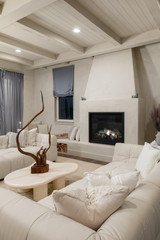
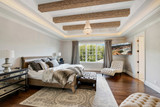
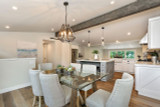
Here are some beams that a customer had this process done to.

Click to enlarge
Knotty pine Knotty pine picture 2 Knotty pine picture 3


Post to Twitter Post to Delicious Post to Digg Post to Facebook Post to MySpace Post to StumbleUpon

19th August

Custom size beams are here!

We’ve created a new line of custom size beams in the style of Woodland, Hand-Hewn, and Aspen, so that you can get just the right beam for your project.

Custom Woodland Beams

Introducing our newly revised Woodland Custom Faux Beams and Woodland Faux Mantles, featuring an expanded line of corbels, and improved color & texture that are very pleasing to the eye. Also, they are available in sizes up to 30" wide x 30" tall

Custom Hand Hewn Beams

Our Hand Hewn Beams are our very first Heavily Distressed beams that feature a line of fireplace mantles. These beams are available up to 18" wide x 18" tall

Custom Aspen Beams

Our new line of Custom Aspen Faux Beams comes complete with a matching line of Aspen Fireplace Mantles. These elegant looking beams are available up to 18" x 18".

With a choice of 3 fully customizable styles of beams, you’re sure to find something to fit your project’s needs.


Post to Twitter Post to Delicious Post to Digg Post to Facebook Post to MySpace Post to StumbleUpon

11th August

Helpful tip tuesday:
Cardboard template to get those tricky angles right

The following are a few steps in order to help you to get thoes tricky angles cut just right when installing faux beams. All that’s required is some Cardboard, a box cutter, and a saw of choice.

Beam with cardboard

1.Cut a piece of cardboard to about 1 foot long and as high as your beam.

Cardboard on wall

2. Hold the cardboard piece to the ceiling.

Cardboard folded on wall

3. Fold cardboard back to get the desired angle that you want the beam to be. Make adjustments as needed.

Cutting cardboard 4. Cut off folded section of the cardboard
checking cut 5. Hold the cardboard up to the ceiling again to confirm the appropriate cut was made. Make any slight adjustments, if necessary. 
tracing template

6. Place cardboard template near the end of the beam and trace down the angle of the cardboard.

cutting faux beam 7. Cut along the line marked by the pencil, removing this side of the beam.
Repeating steps

8. Repeat steps 5 and 6 for the opposite side of the beam.

faux beam cut on wall

9. After both sides of the beam have beam cut, place it on the wall and make any adjustments as needed. You can also caulk or place straps on the end of the beam as desired.


Post to Twitter Post to Delicious Post to Digg Post to Facebook Post to MySpace Post to StumbleUpon

6th August

Truss Story, Part 3 (final)

Truss is almost complete

The main portions of both trusses were now in place except for the center vertical beam that covers the electrical wire, the hole and the chain. Now it was time for all the electrical work. I spent a lot time investigating different fixtures and finally found one at Home Depot that was narrow enough to be installed inside the beam. There was almost no room to work inside the beam so I had to take apart each light and remove some of the fixturing that is there for installing in attics. I had to double check to make sure none of these abutted the inside of the beam or got so warm as to be a hazard. This type clipped in and stayed cool under all circumstances.  I used the same method as before to measure and mark both beams so that the lights would be even. The  drill I used to

Cutting a hole for the lights in the truss

cut these would not go deep enough (it was made for thin drywall) so I had to do a cut from the bottom, and then finish the cutting by drilling from the top. I wrapped the bottom of the beam with a drop cloth and it did a good job of catching all the sawdust. I drilled 4 holes in each beam. The lights clipped in although it was handy to have access from the top when they didn’t seat perfectly. I wired all of these together with twist caps and attached and checked the wiring. (One wrong set of bulbs sent me back to Home Depot where they by now knew me on a first name basis.)

The last electrical source was the extra socket from the end over the fireplace. I had pre-run the wires in the beam and attached this to an external small track-light fixture over the fireplace and facing the wall over the stairs. This was additional decorative lighting but was easy to do. These were also twist cap attached.
Coming down the stretch …… (dare I say it has been 12 months now…) and I flit all over the ladder like a possessed monkey.

There are covers for the tops of the beams, but I am not that fond of the way they look because a slight seam shows where they attach. In the end, the tops of the beams are much higher than anyone can see so I cut plywood to go inside the beam and keep the dust out of the lamps and didn’t have to install the top covers.
This leaves the center vertical beams. I built a small “plate” for the center vertical beams to sit on and stained and screwed it to the horizontal beam. The vertical beam then is installed and a cap/ cover is screwed in on one side to cover the opening. This was a bit tricky, because they need to be perfectly straight up and down, but also need to match each other, cover the hole in the top and be centered perfectly. I talked to Jeff at FauxWoodBeams.com again and these are toe-nailed in at the top and bottom in to the main center beam and the horizontal beam. The caps took the stain a bit different (and darker) then the rest of the beam so it took some work to get them to match and of course, more caulk for the seams. Then I used more of the ubiquitous calk to cover the screw heads that were counter sunk.

Last step was a re-install of the ceiling fan, my goodness, it has been so long I don’t recall even how it goes together….. Then a dimmer was added because the lights were a bit too bright in the beams, then some paint touch up around the beams, straps, and caulking (blue tape works marvels here.)

We had planned to add more angular small support struts in the trusses, but it did not look as good visually so we decided to just keep the simpler single beam in the center. We liked the esthetics and could see more through them from the top floor.

Finished truss

Ta-Da! Put the ladder away and lay on the floor and stare at these beauties…..
As luck would have it, the first time I went upstairs I spotted a paper towel I had left …on top of the ceiling fan…..! Time to get that ladder out again!

Thanks for my wife Cyndi’s help and patience, all of Jeff’s help and encouragement from FauxWoodBeams.com and my friends and family. Hope my experience helps others.

Ta-Da!  Indeed Kevin.  You did an amazing job.  The trusses look fantastic.  I’m sure your Dad would be very proud.  Kudos to you and Cyndi.  Enjoy your beautiful cabin.
-      Jeff

Kevin’s Material list:

1 @ BE-5812 Raised Grain Beam – 7 7/8” x 11 ½” x 14’ – Unfinished [Ridge Beam]      

3 @ DS-5812 Straps

2 @ BE-5810 Raised Grain Beams – 7 ¼” x 9 1/8” x 20’ – Unfinished [Rafter Beams]

2 @ BE-4811 Raised Grain 4-sided Beams – 7 ¼” x 10 7/8” x 20’ – Unfinished [Collar Tie Beams]

1 @ BE-4066 Raised Grain 4-sided Beams – 5 ½” x 5 3/8” x 20’ – Unfinished [Vertical Knee Braces]


Post to Twitter Post to Delicious Post to Digg Post to Facebook Post to MySpace Post to StumbleUpon