18th January

Installing Synthetic Wood Beams: Which Direction?

by Roland | Posted in Customer Design Projects, Tips   No Comments »

A customer recently reached out to us with a very simple question about our synthetic wood beams – which direction should they run in? The customer was interested in installing three of our timber beams in her living room, but didn’t know if they should run the length of the room, or go from one side to the other.

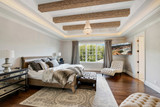
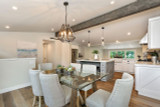
Horizontal ceiling beams traditionally span the shortest gap between walls.

Traditionally, horizontal beams span the shortest gap between walls, as these faux wood beams do..

In all honesty, there’s no right or wrong answer to this question. The beautiful thing about our synthetic wood beams is that you’re pretty much limited only by your imagination when it comes to installation options. From a technical point of view, though, there are some factors to think about.

Firstly, faux wood beams are often used to mimic real timber beams. If that’s the look you’re going for, you should think about installing them in the same position real wood beams would have been used to support a roof or ceiling.

In most buildings, structural ceiling beams run across the shortest length of ceiling because that enables them to support the most amount of weight. This is safe bet for most people installing faux wood beams – especially on flat ceilings.

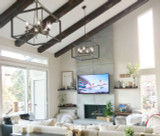
Apex roofs and cathedral ceilings could have beams running either way - or a faux wood beam frame.

Apex roofs and cathedral ceilings could have beams running either way - or a synthetic wood beam frame.

If you’re installing synthetic timber beams on a sloping or apex ceiling, you could run them either way. When framing a ceiling, builders tend to use thicker lengths for the longer stretch between walls, then small beams to prop up the apex.

As exposed ceiling beams became popular, homeowners would generally reveal whichever beam was “underneath” the other; so the exposed beam would run seamlessly from one side of the room to the other.

A framework of crisscrossed beams is also popular – and can be recreated by cutting notches out of our faux wood beams with a regular wood saw, then slotting them together with the other beams at right angles.

Finally, in older timber-beamed homes wooden trusses often supported ceilings. These stunning structures are easy to mimic with faux wood beams; but once again you should create your designs with real architecture in mind. Create a truss design that matches what a real builder would have created out of real wood – check out our wooden truss photo gallery for inspiration.

Truss design easily created with synthetic wood beams.

A synthetic wood truss mimics traditional structural trusses, which supported larger, cathedral ceilings.

Ultimately, though, you have the freedom to do whatever you want with our beams. The great thing about “going faux” is that synthetic wood is lighter, easier to install and a fraction of the price of real wood – and that means you can create things with them that you’d never be able to do with authentic timber.

Do you have an opinion? Please share it with us – and send pictures of your own faux wood beams projects, no matter which direction they’re installed in! Send them to info@fauxwoodbeams.com

Tags: , , ,